The Ocean Package

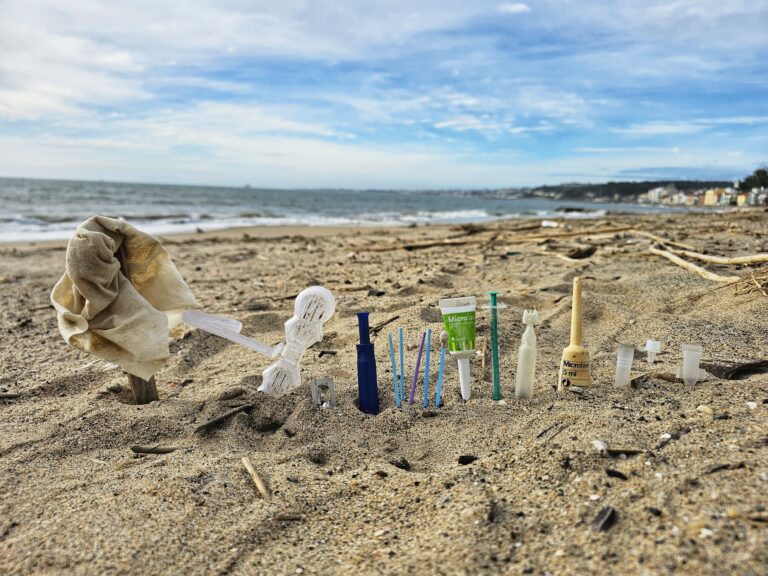
Nahaufnahme von weggeworfenem Plastikmüll und medizinischen Abfällen, die senkrecht im Sand eines Strandes stecken.

Ocean Pollution Caused by Plastic: Why Your Bathroom Is Connected to the Beach

Plastic pollution in our oceans often begins where we least expect it: in our own homes, right behind the bathroom door. What we carelessly flush down the toilet can reach the ocean faster than we realize. Together with our partner The Trash Traveler, we take a closer look at the uncomfortable truth that washes up on beaches after every storm.

The Shocking Reality on Our Coastlines

Syringes, cotton swabs, tampon applicators, and pharmaceutical packaging — it sounds more like a medical facility than an idyllic seaside bay. Yet this is exactly what can be found after just five minutes on the beaches of Lisbon. It is a direct consequence of how we dispose of everyday bathroom products.

Why Wastewater Treatment Plants Fail to Stop Plastic

Wastewater treatment facilities are designed for human waste and toilet paper. Plastic items behave completely differently:

  • They clog pipes and interfere with mechanical systems.

  • During heavy rainfall, many sewage systems become overloaded, allowing untreated wastewater — including plastic waste — to flow directly into rivers and oceans.

  • Lightweight items such as cotton swabs easily bypass filtration systems.

The Hidden Danger of Medical Plastics

Particularly alarming are findings such as insulin needles or rectal gel tubes. These products are often made from durable polymers like polypropylene (PP) — the same material we use at Ocean Package for our reusable boxes, though within a responsible, closed-loop system.

In nature, these materials can persist for decades, gradually breaking down into microplastics. In addition, they may carry pharmaceutical residues that enter and contaminate marine ecosystems.

The Problem with Blister Packaging and Wet Wipes

Blister packs and wet wipes present another major challenge.
Blister packaging consists of complex multi-material composites — usually plastic combined with aluminum — making them extremely difficult to recycle. When improperly disposed of, they frequently end up in waterways.

Wet wipes, often marketed as “flushable,” contain synthetic fibers that do not dissolve in water. Instead, they contribute to sewer blockages and ultimately break down into microplastics that reach the ocean.

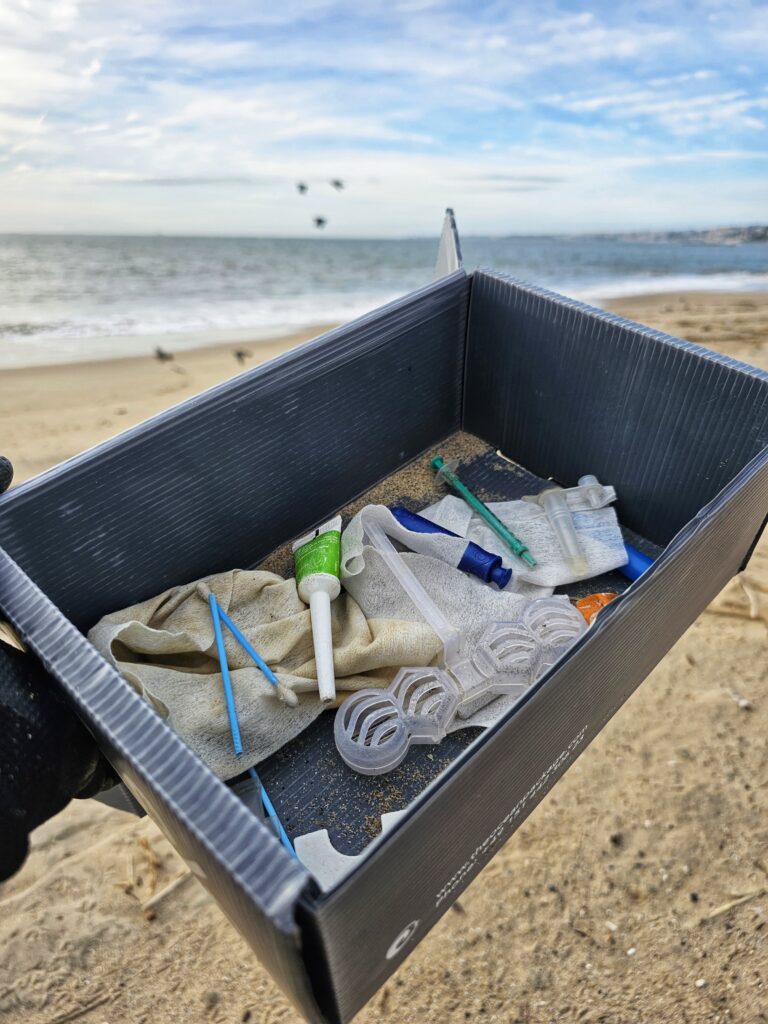
Eine Hand hält eine graue, robuste Mehrweg-Versandbox von The Ocean Package, in der gesammelter Plastikmüll vom Strand liegt. Im Hintergrund ist das Meer zu sehen.
Summary

Protecting the Oceans Starts at Home

The truth is simple, yet uncomfortable: the toilet is not a trash can. Every item we flush contributes to plastic pollution in our oceans. To solve this problem in the long term, we need three things:

  • Greater awareness from each individual.

  • Better product design focused on circularity.

  • Improved infrastructure and innovative reusable systems.

At Ocean Package, we work every day to reduce packaging waste by over 95%, ensuring that less plastic enters circulation in the first place. The ocean is connected to our bathrooms through invisible pipes — let’s make sure that only what truly belongs there ends up there.

Would you like to learn more about how we reduce plastic waste in the oceans through circular packaging solutions? Discover our Packaging-as-a-Service model.

Relevant content

Leave a Reply

Your email address will not be published. Required fields are marked *

Latest Blog Posts